


Is Your Pool Losing Water? How to Tell Evaporation from a Leak
Fri, Aug 28th, 2026
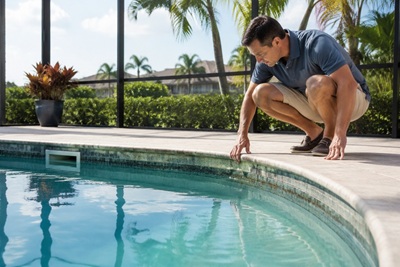
You glance outside and notice that your pool’s water level looks lower than it did a few days ago. You add some water, but before long, it seems low again. Is the hot Florida sun simply causing the water to evaporate, or could your pool have a leak?
Every swimming pool naturally loses some water through evaporation. In Southwest Florida, high temperatures, intense sunshine, wind, and frequent pool use can make that water loss more noticeable. However, consistently needing to refill your pool may signal a problem that should not be ignored.
Knowing the difference between ordinary evaporation and a possible leak can help you avoid wasted water, higher utility bills, equipment damage, and costly repairs.
Why Do Pools Lose Water Naturally?
Evaporation occurs when liquid water turns into vapor and enters the air. It happens in every uncovered swimming pool, but the amount of water lost can change from day to day.
Several factors can increase evaporation:
- Hot temperatures and direct sunlight
- Low humidity
- Strong winds across the water
- Heated pool water
- Frequent swimming and splashing
- Water features such as fountains and waterfalls
- A large difference between the water and nighttime air temperatures
A pool may lose more water during a particularly hot, dry, or windy week than it does during calm, humid weather. Pools with waterfalls, fountains, spillovers, or other water features can also experience greater water loss because more water is exposed to the air.
Some water may also leave the pool through normal use. Children playing, swimmers entering and exiting the water, and regular backwashing of the filter can all lower the water level.
The question is not whether your pool will lose water. It will. The important question is whether it is losing more water than weather and normal use can reasonably explain.
Warning Signs That Your Pool May Have a Leak
A falling water level is the most obvious sign of a possible leak, but it is not the only one. You may also notice:
- The pool requires frequent refilling
- Your water bill increases unexpectedly
- The water level drops even during cool or humid weather
- Air bubbles appear in the pool’s return lines
- The pump has difficulty staying primed
- Cracks develop in the pool shell or surrounding deck
- Tiles become loose or begin falling off
- The ground near the pool or equipment remains wet
- Grass grows unusually fast in one area
- The pool’s chemicals become difficult to balance
- Algae returns despite regular treatment
- The autofill system seems to run constantly
A leak may not always create a visible puddle. Water can escape underground through plumbing lines, fittings, drains, lights, skimmers, or cracks in the pool’s surface. That is why a leak can continue for weeks or months before a homeowner realizes what is happening.
Pools equipped with automatic water-filling systems require special attention. Because the system replaces lost water automatically, it may conceal a leak. The first noticeable sign could be a higher water bill or difficulty maintaining proper chemical levels.
Try the Bucket Test
The bucket test is a simple way to compare the amount of water your pool loses with the amount lost through ordinary evaporation.
First, make sure the pool is filled to its usual operating level. Fill a clean bucket with pool water until it is several inches from the top. Place the bucket on a pool step so it is partially surrounded by pool water. The bucket should remain stable and should not be completely submerged.
Mark the water level inside the bucket. Then mark the pool’s water level on the outside of the bucket or on the pool wall. Turn off fountains, waterfalls, and other water features, and avoid adding water during the test.
After approximately 24 hours, compare the two levels.
If the pool and the bucket lose approximately the same amount of water, evaporation is probably responsible. If the pool level drops noticeably more than the water inside the bucket, your pool may have a leak.
For additional information, the test can be performed once with the pool pump running and once with it turned off. Greater water loss while the system is operating could point toward a plumbing or equipment-related problem. Greater loss while the system is off may suggest a different type of leak.
The bucket test can tell you whether further investigation may be necessary, but it cannot identify the leak’s exact location.
Where Do Pool Leaks Commonly Occur?
A swimming pool is a complete system made up of the pool structure, plumbing, circulation equipment, fittings, and accessories. A leak can develop in almost any of these areas.
Common sources include:
The skimmer
Small cracks can form where the plastic skimmer meets the pool’s surface. Because the skimmer is connected to the plumbing system, even a small separation may allow a significant amount of water to escape over time.
Pool plumbing
Underground pipes can crack, shift, or develop loose connections. Tree roots, ground movement, aging materials, and previous repairs can all contribute to plumbing leaks.
Pumps, filters, and valves
Look for dripping connections, worn seals, damp equipment pads, or water collecting beneath the pump or filter. Small equipment leaks may only appear while the system is running.
Pool lights and fittings
The conduit or seal surrounding an underwater light can become a source of leakage. Returns, drains, and other fittings may also develop problems as seals deteriorate.
The pool surface
Cracks in concrete, gunite, fiberglass, tile, or interior finishes may allow water to escape. Some surface cracks are cosmetic, while others require professional attention.
Water features
Fountains, waterfalls, spas, and spillovers contain additional plumbing and connections. A leak in one of these features may only occur when it is operating.
Why You Should Not Ignore a Possible Leak
A pool leak is more than an inconvenience. Constantly adding fresh water dilutes chlorine, salt, and other chemicals. This makes the water harder to balance and may increase chemical costs.
If the water falls below the skimmer opening, the circulation system may begin pulling in air. That can cause the pump to lose prime, overheat, or sustain damage. Escaping water may also wash away soil beneath the deck, damage nearby landscaping, contribute to cracks, or affect the stability of the surrounding area.
A small leak rarely repairs itself. Finding it early may help prevent a relatively minor problem from becoming a much larger and more expensive repair.
When Should You Call a Pool Professional?
Contact a professional if the bucket test suggests a leak, the water level continues falling, or you notice equipment, plumbing, or structural warning signs.
Avoid assuming that the visible problem is the only problem. For example, adding sealant to a crack will not help if the actual leak is in an underground pipe. A trained pool professional can inspect the system, rule out common causes, and determine whether specialized leak detection or repairs are needed.
Protect Your Pool and Your Investment
Florida weather can make pool water levels fluctuate, but regularly adding large amounts of water should not become part of your normal routine. Paying attention to changes in the water level can help you identify a leak before it wastes water, disrupts your pool chemistry, or damages your equipment.
If you are concerned about unexplained water loss, equipment performance, or the condition of your pool, Sweetwater Pool Service is ready to help. We proudly serve pool owners throughout Marco Island, Naples, Bonita Springs, Estero, and Fort Myers.
Call (239) 775-POOL or contact Sweetwater Pool Service to schedule service and keep your pool clean, efficient, and ready to enjoy.